

Key Takeaways
- Bottle recycling transforms plastic waste into valuable raw material while reducing disposal costs and strengthening circular supply chains.
- PET and HDPE bottles remain the most demanded recyclable plastics, offering consistent revenue opportunities when properly sorted and prepared.
- Carlin Waste Recycling evaluates your bottle scrap, secures competitive market rates, and manages the entire brokerage process. Get a quote today!
Bottle recycling is one of the most effective strategies you can implement to reduce disposal costs, strengthen your sustainability goals, and generate revenue from plastic scrap.
In this guide, you will learn how the bottle recycling process works, what types of bottles can be recovered, what current pricing looks like in the United States, and how to monetize your material stream with a trusted brokerage partner.
Let’s take a look!
What Is Bottle Recycling?
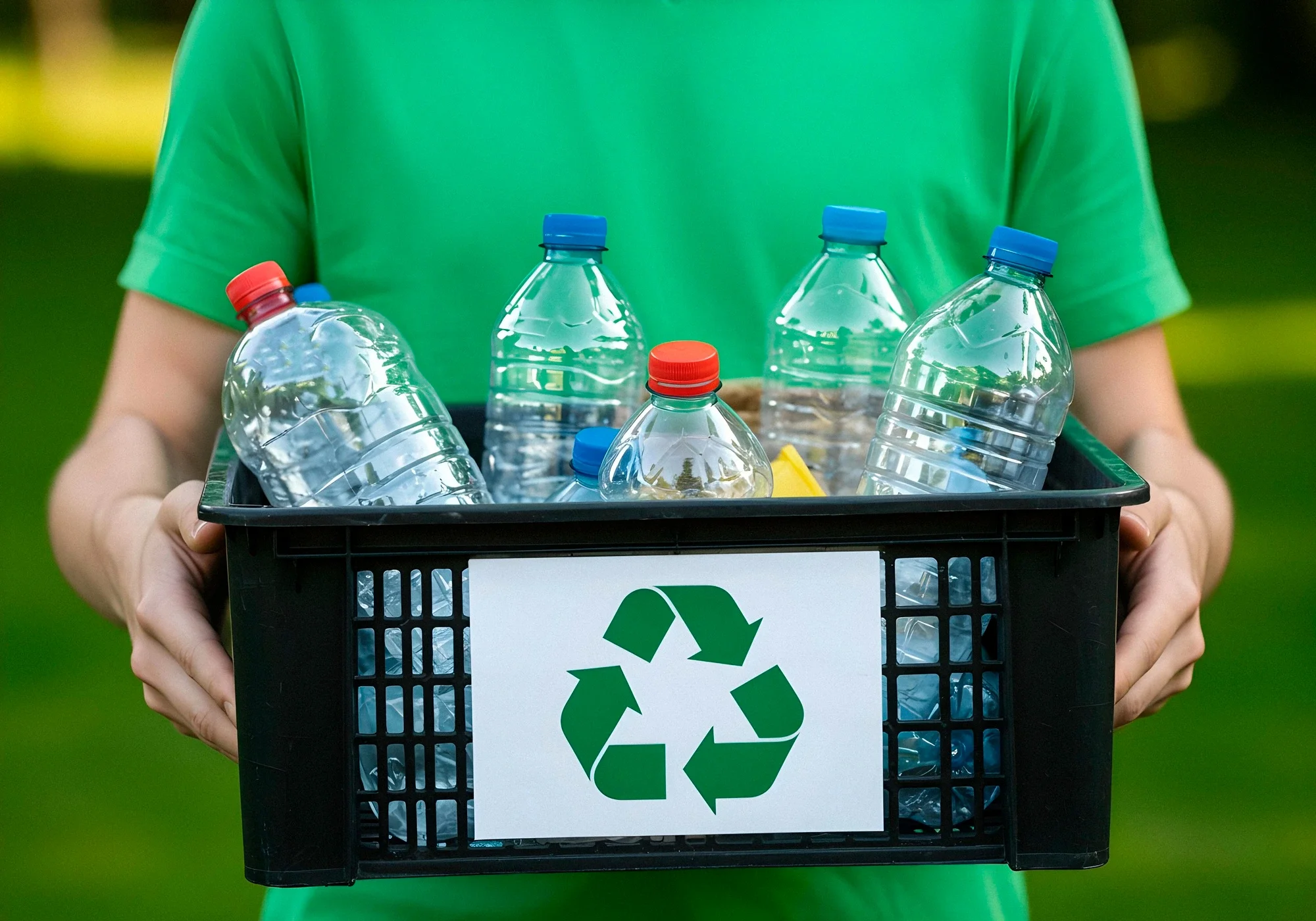
Bottle recycling is the systematic collection, sorting, cleaning, processing, and resale of used plastic bottles so they can be transformed into new raw materials.
When bottles are recycled, waste is not just diverted from landfills. The material is converted into feedstock that manufacturers use to produce new containers, packaging components, fibers, construction materials, and industrial goods.
What Does the Bottle Recycling Process Look Like?
The bottle recycling process includes:
- Collection: Used bottles are recovered through curbside programs, commercial operations, retail take-back systems, and industrial facilities. Then, the material is transported to a material recovery facility or directly to a plastics processor.
- Sorting: At the facility, bottles are separated by polymer type since each resin requires different processing conditions. Advanced optical sorters, infrared scanners, and manual inspection are used to distinguish materials by resin or by color.
- Removal of contaminants: Non-plastic components such as caps (often made from polypropylene), shrink sleeves, labels, seals, and leftover liquids are removed. This prevents cross-contamination between polymers.
- Washing: Bottles undergo intensive washing in controlled systems that use water, detergents, and friction-based cleaning to eliminate adhesives, food residue, dirt, and organic matter. Depending on the facility, both cold and hot wash cycles may be used to ensure a high level of cleanliness before further processing.
- Grinding and flaking: Once cleaned, the bottles are mechanically shredded into small, uniform flakes. These flakes are easier to handle, dry more efficiently, and create a consistent feedstock for melting. At this stage, additional separation techniques such as float-sink tanks may be used to further isolate specific polymers.
- Melting and pelletizing: The clean plastic flakes are fed into extrusion systems where they are melted under controlled heat and pressure. Filtration screens remove any remaining microscopic impurities. The molten plastic is then cooled and cut into standardized resin pellets, which are easier to store, transport, and sell in commodity markets.
- Manufacturing reuse: The recycled pellets are purchased by manufacturers and incorporated into a wide range of new products, such as beverage bottles, packaging materials, synthetic fibers for textiles, strapping, containers, etc.
Reprocessing 1 ton of plastic can save up to approximately 130 million kilojoules of energy.
– Nisha Singh and Tony R. Walker, r. Researchers
What Types of Bottles Can Be Recycled?
The types of bottles that can be recycled are:
- PET bottles (resin code #1). Commonly used for drinks and food food containers, PET is one of the most actively recycled plastics in the U.S. Its clarity, strength-to-weight ratio, and food-safe properties make it highly desirable in secondary markets.
- HDPE bottles (resin code #2). Frequently found in milk jugs, cleaning product containers, shampoo bottles, and industrial chemical packaging. It is valued for its durability, impact resistance, and chemical stability.
- PP bottles (resin code #5). Polypropylene bottles and rigid containers are commonly used for certain food packaging, prescription bottles, caps, and specialty containers. While PP recycling infrastructure is less widespread than PET and HDPE, demand for recycled polypropylene (rPP) has been increasing, particularly in automotive components, packaging, and consumer goods.
- Select rigid plastic containers. These may include tubs, jars, and thicker molded containers made from compatible resins. Acceptance depends on local facility capabilities, contamination levels, and end-market demand.

How Are Bottles Prepared for Recycling?
Bottles are prepared for recycling through careful separation, cleaning, and baling to meet processing standards. Segregation reduces processing costs and increases buyer confidence in material quality.
Removing excessive liquid and flattening bottles can improve transportation efficiency. When materials are compacted into dense, well-formed bales, freight becomes more cost-effective and pricing improves.
Why Should Bottles Be Recycled?
Bottles should be recycled because they deliver measurable operational, financial, and environmental benefits, such as:
- Reduced landfill dependency and fees. Diverting plastic bottles from disposal streams decreases landfill volume and lowers tipping fees. This can translate into significant annual savings while also reducing long-term environmental liabilities.
- Conservation of petroleum and natural gas. Most plastic resins are derived from fossil fuels. Recycling bottles reduces the need to extract and refine virgin petroleum and natural gas, preserving natural resources.
- Lower greenhouse gas emissions. Producing recycled resin typically requires less energy than manufacturing virgin plastic. By incorporating recycled content, companies can reduce their carbon footprint and cut Scope 3 emissions exposure.
- Stronger support for circular supply chains. Recycling bottles helps maintain a steady supply of secondary raw materials, supporting closed-loop systems and reinforcing circular economy initiatives across industries.
- Revenue generation through scrap sales. Clean, well-sorted plastic bottles have commodity value. Businesses that accumulate sufficient volumes can sell baled material to processors, transforming waste into a recoverable asset.
- Improved ESG reporting and sustainability metrics. Recycling programs provide measurable data—such as diversion rates, recycled tonnage, and emissions reductions—that strengthen ESG disclosures and sustainability reporting..
- Enhanced brand positioning. Demonstrating a commitment to bottle recycling signals environmental responsibility to clients, partners, and end consumers. This can build trust, strengthen relationships, and differentiate a company.
One of the most important areas of development is in the commercialization of chemical recycling technology, where PCR PET can be restored to virgin-like performance.
– P. Benyathiar, P. Kumar, G. Carpenter, J. Brace, and D. K. Mishra, researchers
What Is the Cost of Bottle Recycling?
The cost of bottle recycling in the United States is approximately $150 to $300 per ton, according to Pastillator System. The value depends on factors such as material quality, volume, resin type, contamination levels, and regional market demand.

How Can Businesses Earn Money from Bottle Recycling?
Yes, businesses can earn money from bottle recycling. When you accumulate consistent volumes of clean PET or HDPE, buyers compete for supply. Larger, well-prepared loads typically command higher per-pound values due to improved transportation efficiency. Higher bale density and lower contamination levels also increase commodity value.

Sell Your Plastic Scrap Today With Carlin Waste Recycling
At Carlin Waste Recycling, we connect your plastic scrap to the most competitive markets. With more than 10 years of experience, we manage virgin and recycled plastics, post-industrial resins, and clean scrap materials across the United States.
Our role is to evaluate your material, assess current market conditions, and secure fair rates through reliable buyer networks. Your business gains transparent pricing, dependable logistics coordination, and environmentally responsible processing pathways. Every transaction is structured to protect your margins and maintain compliance with recycling standards.
If you generate bottle scrap consistently, this is the moment to convert it into measurable revenue. Request a quote today and discover how you can turn waste into value!

Bottle Recycling FAQs
What Is the Difference Between PET and HDPE Bottles?
The difference between PET and HDPE bottles is their chemical composition, appearance, and end-use applications. PET bottles are typically clear and used for beverages, while HDPE bottles are more opaque and used for milk, detergents, and chemical containers.
Does Bottle Recycling Help the Environment?
Yes, bottle recycling helps the environment by reducing landfill waste, conserving natural resources, lowering energy consumption, and decreasing greenhouse gas emissions associated with virgin plastic production.
Leave a Reply