

Key Takeaways
- Plastic pellets are the foundation of modern manufacturing, serving as the primary raw material for packaging, construction, automotive, and consumer goods industries.
- Recycling plastic pellets plays a critical role in the circular economy, reducing reliance on virgin materials while supporting sustainability and regulatory compliance.
- At Carlin Waste Recycling, we help businesses turn plastic waste into long-term value by transforming discarded materials into high-quality recycled pellets for industrial reuse. Get a quote today!
Are you curious about what pellets of plastic are and why they play a key role in modern manufacturing? You’re in the right place.
This article explains how they are manufactured, the different types available, and how recycling processes transform plastic waste into valuable raw materials.
Let’s dive in!
What Are Pellets of Plastic?
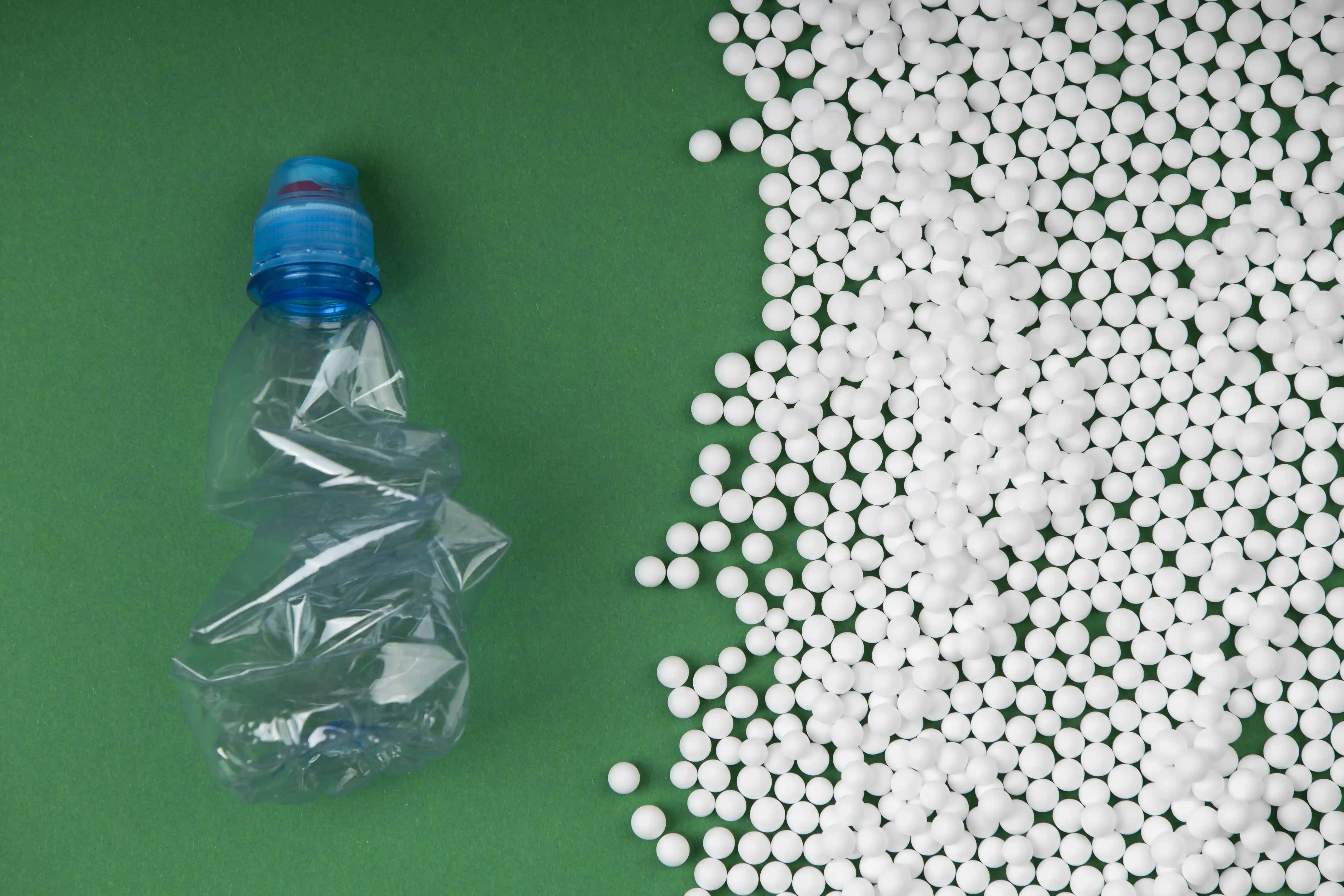
Pellets of plastic are small, solid granules that serve as the raw material for manufacturing plastic products. Their uniform size and shape make them easy to transport, store, and process efficiently in industrial machinery.
Often described as the “building blocks” of plastic manufacturing, these pellets are melted down and molded into finished products such as containers, automotive parts, piping, films, textiles, and countless other applications.
Most pellets are cylindrical or spherical and measure just a few millimeters in diameter. They can be produced from virgin petrochemical materials or created from recycled plastic waste, depending on the intended use and quality requirements.y have shorter fibers and coatings that affect strength and recyclability.
How Are Pellets of Plastic Manufactured?
Pellets of plastic are manufactured through a controlled industrial process designed to create uniform, high-performance polymer granules.
The process begins with polymerization, where monomers such as ethylene or propylene are chemically bonded to form long polymer chains. These are then melted and fed into an extruder, where the molten plastic is pushed through a die with small openings.
As the plastic exits the extruder, it forms strands that are cooled using air or water and then cut into evenly sized pellets.

Types of Plastic Pellets and Their Industrial Uses
Different polymers are used to produce plastic pellets, each offering specific properties suited to particular applications. Common types include:
- Polyethylene (PE) pellets, used in plastic bags, packaging films, and containers.
- Polypropylene (PP) pellets are widely used in automotive parts, textiles, and household products.
- Polyethylene terephthalate (PET) pellets are primarily used for beverage bottles and food packaging.
- Polystyrene (PS) pellets, commonly used in insulation materials and electronics housings.
- Polyvinyl chloride (PVC) pellets, used in pipes, flooring, and medical products.

How Are Pellets of Plastic Recycled?
Pellets of plastic are recycled through a multi-stage process that converts plastic waste into reusable raw material:
1. Collection and Sorting
Plastic waste is collected from industrial, commercial, or post-consumer sources. The material is then sorted by polymer type, color, and contamination level. Accurate sorting is essential to prevent material incompatibility and quality issues.
2. Shredding and Size Reduction
Once sorted, plastics are shredded into smaller flakes. This step improves washing efficiency and prepares the material for melting during extrusion.
3. Washing and Decontamination
The shredded plastic is thoroughly washed to remove dirt, labels, adhesives, oils, and food residue. Advanced washing systems help ensure the recycled material meets industry quality standards.
4. Melting and Extrusion
Clean plastic flakes are melted and processed through an extruder. Filtration systems remove remaining contaminants such as metal particles or paper fibers.
5. Pelletizing and Cooling
The molten plastic is cut into pellets and cooled. These recycled pellets are tested for consistency, mechanical strength, and melt flow before being approved for reuse in manufacturing.

Turn Plastic Waste Into Value With Carlin Waste Recycling
At Carlin Waste Recycling, we help businesses transform plastic waste into valuable recycled materials that can be reintegrated into manufacturing processes. Our recycling solutions are designed to recover high-quality plastic feedstock and convert it into reliable recycled pellets suitable for industrial use.
We work with a wide range of plastic waste streams, applying advanced sorting, washing, and extrusion technologies to ensure consistent quality and performance.
By turning discarded plastics into reusable raw materials, we support circular economy goals while helping our partners reduce landfill dependency and material costs.
Get a quote today to see how we can help you turn plastic waste into high-quality recycled materials while meeting your sustainability goals.

Pellets of Plastic FAQs
Can Pellets of Plastic Be Created from Recycling?
Yes, pellets of plastic can be created from recycling, and this practice has expanded significantly in recent years. Advances in mechanical and chemical recycling technologies now allow recycled pellets to meet the performance requirements of many industries, including packaging, construction, and automotive manufacturing.
What Are the Quality Differences Between Virgin and Recycled Pellets?
The quality differences between virgin and recycled pellets are primarily related to material consistency and purity:
- Virgin pellets offer greater uniformity in color and polymer composition.
- Recycled pellets may show slight variations depending on feedstock sources.
- Virgin pellets typically have higher tensile strength.
- Recycled pellets can contain trace impurities, even after filtration.
Pellets of Plastic vs. Microplastics: What Is the Difference?
The difference between pellets of plastic and microplastics lies in their origin and intended use. Plastic pellets are intentionally manufactured raw materials designed for industrial processing. Microplastics are small plastic particles that result from the degradation of larger plastic products or are intentionally added to items such as cosmetics and cleaning agents.
Are Plastic Pellets Considered Primary Microplastics?
Yes, pellets of plastic are considered primary microplastics as they are manufactured at a small size rather than formed through degradation.
Leave a Reply