

Key Takeaways
- Stretch film is a recyclable LLDPE material that can generate revenue when properly collected, sorted, and baled.
- Recycling stretch film lowers your carbon footprint compared to using virgin resin and positions your business as environmentally responsible.
- Carlin Waste Recycling leverages its nationwide buyer network and market expertise to secure competitive pricing and dependable outlets for your material. Get a quote right away!
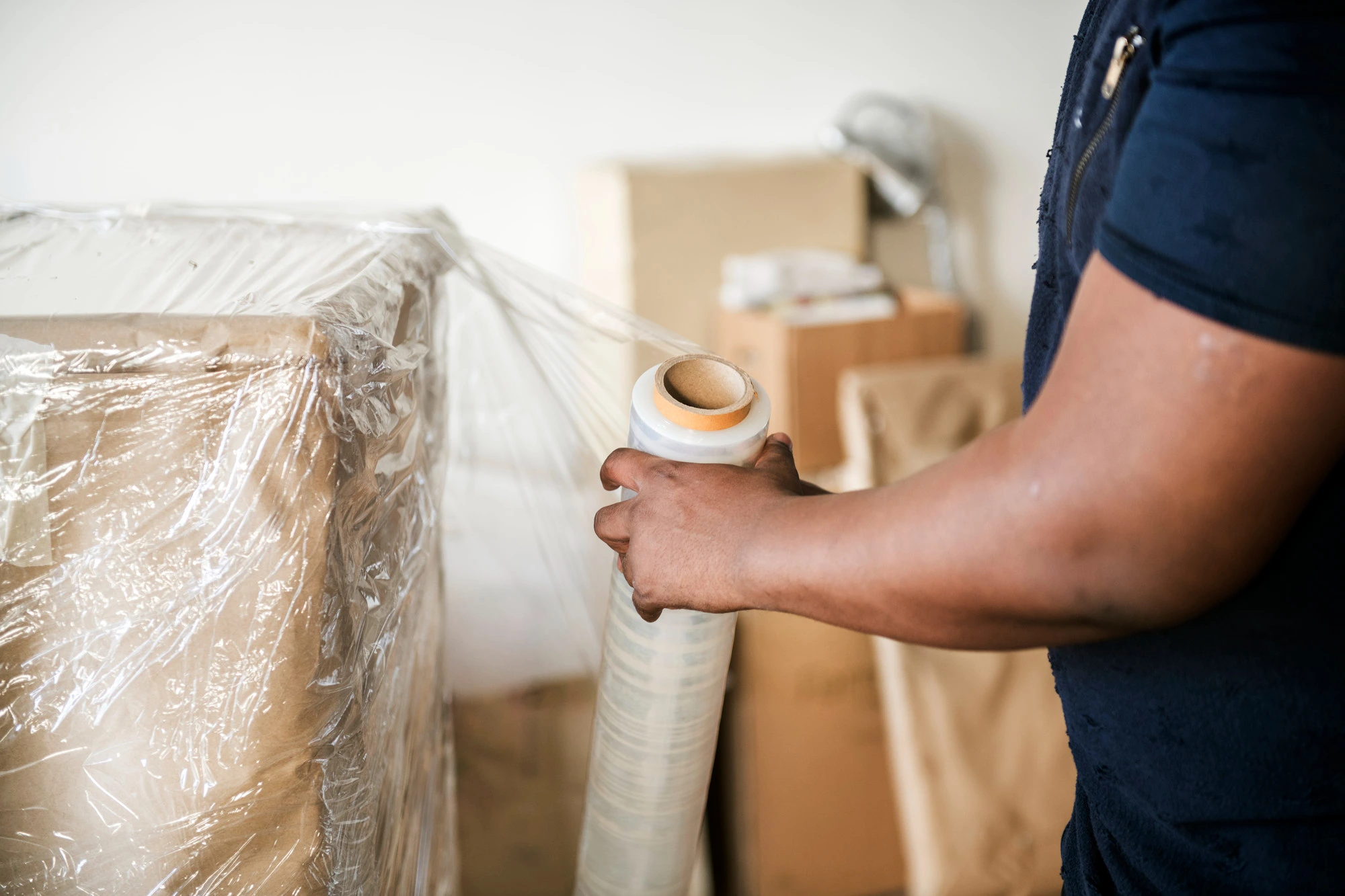
Does your warehouse or distribution center generate stretch film? If your business produces large volumes of pallet wrap, you can convert it into a revenue-generating commodity when managed correctly.
This article provides a look at the stretch film recycling process that transforms used film into high-quality recycled resin, the real costs of recycling and its economical and environmental benefits, among other issues.
Let’s dive in!
What Kind of Plastic Is Stretch Film?
Stretch film is a polyethylene plastic, primarily made from Linear Low-Density Polyethylene (LLDPE). This material is engineered for elasticity, puncture resistance, and load stability. Its molecular structure allows it to stretch tightly around products while maintaining tension.
LLDPE is produced by combining ethylene with small amounts of other chemicals called alpha-olefins, such as butene, hexene, or octene. This process gives the plastic a structure with short, even branches, which helps make it strong and flexible.
What Are the Different Types of Stretch Film?
The different types of stretch film are:
- Hand stretch film: Designed for manual application using a handheld dispenser, this film is commonly used in low- to medium-volume operations. It offers flexibility for wrapping irregular loads and smaller pallet quantities
- Machine stretch film: Engineered for use with automated or semi-automated wrapping machines, this film is suited for high-volume warehouses and distribution centers. It delivers consistent stretch levels, optimized load containment, and faster wrapping cycles, improving efficiency and reducing material variability.
- Blown stretch film: Manufactured through a blown extrusion process, this type offers superior puncture and tear resistance. Its higher load-holding force makes it suitable for heavy or irregular shipments..
- Cast stretch film: Produced using a cast extrusion process, is known for excellent clarity and uniform thickness. It provides consistent cling and is cost-effective for standard pallet loads.
- Pre-stretched film: Mechanically stretched during production, this film requires less force during application and reduces material consumption. It improves ergonomic conditions for workers and helps control film usage.
- UV-resistant stretch film: Formulated with UV stabilizers, this film protects palletized goods stored outdoors from degradation caused by prolonged sun exposure. It’s commonly used in construction, agriculture, and other industries where loads remain outside for extended periods.
- Colored or tinted stretch film: Available in various colors or opacity levels, this film can enhance security by limiting visibility of high-value goods while also streamlining warehouse organization.

Incorporating up to 50% recycled content in multilayer stretch films demonstrates that recycled polymers can maintain functional properties while reducing reliance on virgin materials.
– N. Kulyk, M. Alipatova, O. Chepeliuk, & G. Mnerie, researchers
What Are the Common Uses of Stretch Wrap?
The common uses of stretch wrap are:
- Securing palletized loads for shipping.
- Stabilizing products during transport.
- Protecting goods from moisture and dust.
- Bundling smaller items together.
Can You Recycle Stretch Film?
Yes, stretch film can be recycled when it’s clean, dry, and separated from other materials. It is a valuable post-commercial plastic stream, particularly when contamination is minimal. That is why keeping it free from dirt, labels, food residue, and other contaminants is essential for successful processing.

How Stretch Film Gets Recycled: The Process
The process of recycling stretch film typically includes:
- Collection and Segregation: The stretch film is separated immediately after pallet unwrapping. This helps prevent contamination with cardboard, tape, or other plastics, preserving material quality and increasing its recyclability.
- Compaction or Baling: Once collected, the loose film is compressed into dense, uniform bales. This step reduces volume, lowers transportation costs, and improves handling efficiency while increasing the material’s market value for recyclers.
- Transportation to Recycling Facility: The stretch film is shipped to a specialized recycling or extrusion plant. Many companies coordinate scheduled pickups with recycling partners to ensure consistent material flow and avoid storage overflow.
- Sorting and Inspection: At the facility, the material undergoes quality control checks. Operators inspect the bales to assess contamination levels, remove foreign materials, and ensure the film meets processing specifications.
- Shredding and Washing: After inspection, the film is shredded into smaller flakes. These flakes are thoroughly washed to eliminate dirt, labels, adhesives, and residual contaminants, ensuring a cleaner final product.
- Extrusion and Pelletizing: Once the plastic flakes are thoroughly cleaned and dried, they move into the extrusion stage. Inside the machine, the material is melted under controlled temperatures and pressure, allowing it to become a uniform molten mass.
During this phase, the plastic typically passes through fine filtration screens that remove any remaining microscopic contaminants, ensuring higher-quality recycled resin.
These pellets are carefully tested for melt flow index, density, and purity to ensure they meet performance standards, making them suitable for manufacturing new plastic products, including blends used in stretch film production. - Manufacturing of New Products: These recycled pellets can be used in a wide range of applications, including trash bags, plastic lumber, agricultural films, and in some cases, blended with virgin resin to produce new stretch wrap.
What Is the Cost of Recycling Stretch Film?
The cost of recycling stretch film is approximately US $3,000 per ton according to Green Blue in May 2025.
Recycling costs are market-dependent and influenced by factors such as resin demand, oil prices, freight rates, and bale quality. Pricing can fluctuate based on regional market conditions and overall supply and demand for recycled polyethylene.
The global plastic films market size is likely to be valued at US$145.4 Bn in 2025 and is expected to reach US$210.1 Bn by 2032, growing at a CAGR of 5.4% during the forecast period from 2025 to 2032.
– Rajat Zope, researcher
Should Stretch Film Be Baled Before Recycling?
Yes, stretch film should be baled before recycling as baling increases density, reduces freight costs, and improves market value.
Loose film takes up excessive trailer space and is expensive to transport. Properly baled material signals quality control and operational commitment, which buyers reward with stronger pricing.
If your facility generates consistent volumes, investing in a vertical or horizontal baler can deliver long-term savings through reduced hauling costs and improved rebate opportunities.

What Are the Benefits of Recycling Stretch Film for Businesses?
The benefits of recycling stretch film for businesses are:
- Reduced disposal costs: By diverting stretch film from general waste streams, companies can significantly reduce landfill tipping fees and avoid rising disposal charges. Over time, this shift lowers overall waste management expenses, especially in high-volume operations where plastic film represents a substantial portion of outbound waste.
- Revenue generation: Clean, properly baled stretch film has commodity value in recycling markets. Businesses can receive revenue-sharing payments from recyclers, particularly when contamination is minimized and volumes are consistent.
- Improved ESG reporting: Implementing a stretch film recycling program provides measurable sustainability data, such as diversion rates, recycled tonnage, and carbon footprint reductions.
- Supply chain responsibility: By reducing waste and creating traceable recycling outcomes, companies enhance transparency, support circular material flows, and position themselves as reliable, forward-thinking suppliers.
- Operational efficiency: Establishing clearly defined collection points and waste procedures creates more organized workflows in warehouses and distribution centers.
- Brand positioning: Publicly communicating stretch film recycling efforts reinforces a company’s commitment to environmental stewardship. This can enhance brand reputation, strengthen stakeholder trust, and differentiate the business.

Turn Plastic Film Waste Into Value With Carlin Waste Recycling
At Carlin Waste Recycling, we specialize in connecting companies that generate post-commercial stretch film with the right buyers in the recycled plastics marketplace.
Using our extensive network of polymer buyers and market expertise, we help logistics centers, manufacturers, and warehouses secure competitive pricing for their recovered LLDPE.
We manage the entire selling process so that your business can turn stretch film waste into revenue. We analyze your volume, bale quality, logistics footprint, and regional demand to secure competitive pricing.
With more than 10 years of proven recycling expertise, we provide dependable brokerage services designed to maximize return while ensuring environmental compliance.
Ready to convert your film waste into measurable value? Request a quote today and discover how competitive the stretch film market can be for your business.
Stretch Film FAQs
What Is the Difference Between Stretch Film and PE Film?
The difference between stretch film and PE film is that stretch film is a highly elastic plastic wrap used to secure and stabilize palletized goods during transport. It stretches tightly around products and clings to itself. PE film (polyethylene film), on the other hand, is a broader category of plastic film used for general protection, covering, or packaging. It may or may not be stretchable.
What Is the Carbon Footprint of Stretch Film?
The carbon footprint of stretch film is approximately 1.7 to 3 kg of CO₂e per kilogram of film produced, depending on the resin source, manufacturing process, and energy mix used.
Can Tinted or Black Stretch Film Be Recycled?
Yes, tinted or black stretch film can be recycled, but market demand may be more limited compared to clear film. Colored films contain pigments that affect the appearance of recycled pellets. As a result, they are often directed toward applications where color consistency is less critical.
Clear stretch film typically commands higher pricing because it offers greater versatility in reprocessing.
Leave a Reply