
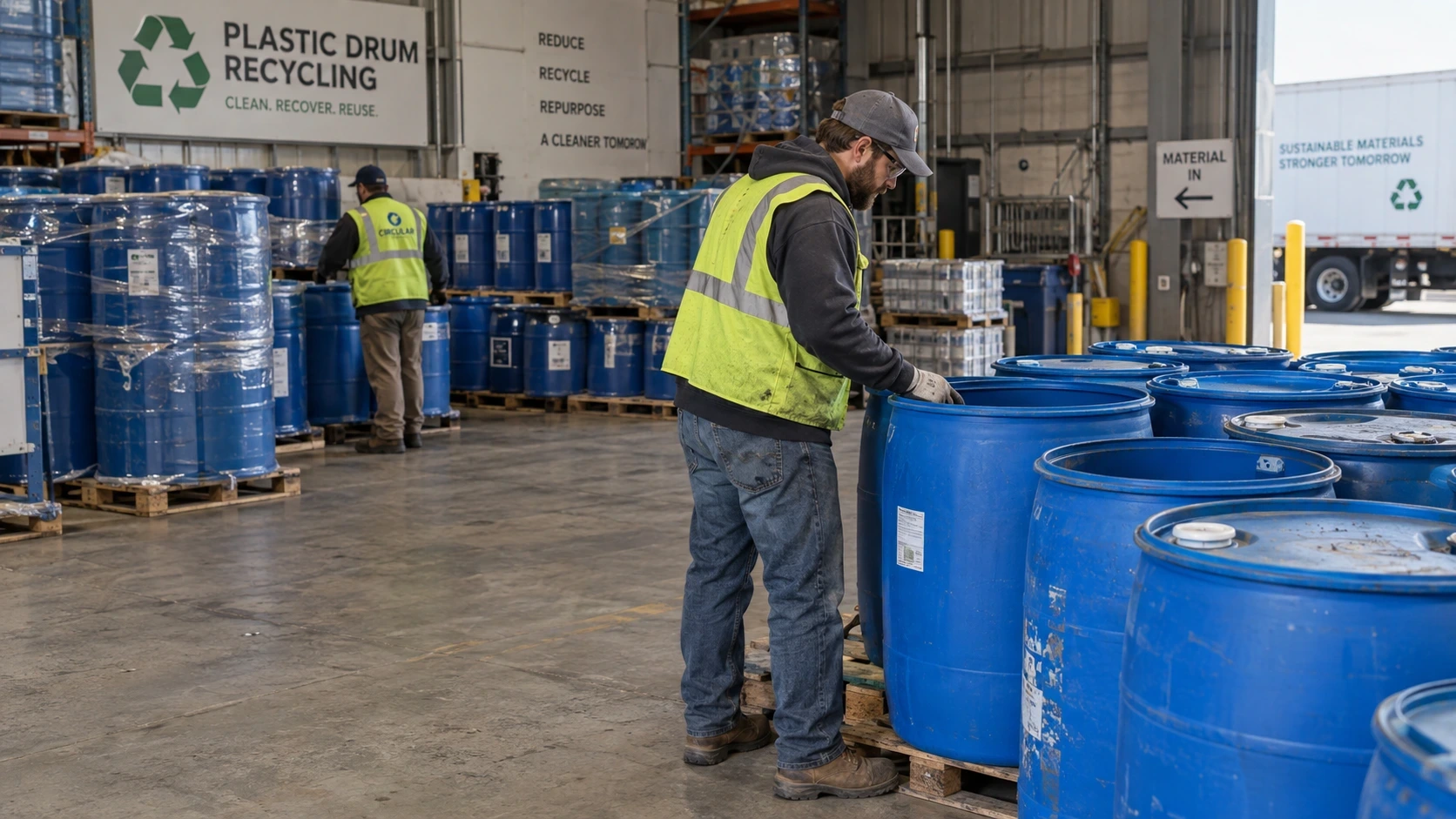

Key Takeaways
- Most industrial plastic drums are made from recyclable HDPE, and clean, properly identified containers may retain scrap value after their useful life ends.
- Plastic drum scrap value ranges from $0.09 to $0.37 per pound for HDPE.
- Before selling plastic drum scrap, confirm the resin and previous contents, remove unacceptable contamination, and keep the load properly separated. Get a quote now from Carlin Waste Recycling!
If plastic drum scrap is taking up space in your plant, warehouse, or distribution center, selling the material may help you recover value from containers you no longer use.
This guide explains what plastic drums are made of, how they are recycled, how to prepare a commercial load, what affects scrap value, and what to consider before selling.
Let ‘s get started!
What Is a Plastic Drum?
A plastic drum is a durable industrial container designed to store, handle, or transport bulk liquids, powders, solids, and other materials.
Plastic drums are commonly used in manufacturing, logistics, food distribution, agriculture, chemical handling, and other industries that rely on durable bulk packaging. They come in different sizes, designs, closures, and configurations depending on their intended use.
What Are Plastic Drums Made Of?
Plastic drums are made of high-density polyethylene (HDPE) in many industrial applications.
HDPE combines impact strength, chemical resistance, durability, and relatively low weight. Many drums are produced through blow molding, which shapes heated plastic into a hollow container. Eagle, for example, uses blow-molded HDPE across its industrial drum line.
What Are the Different Types and Sizes of Plastic Drums?
The different types and sizes of plastic drums are primarily open-head and closed-head containers available in several capacities for industrial use.
Open-head drums have a removable lid that provides access across most or all of the top. This design is useful for solids, powders, viscous products, and applications where you need direct access to the contents.
Closed-head or tight-head drums have a fixed top with smaller openings for filling and dispensing, and are commonly used for liquids.
Sizes and dimensions vary by manufacturer and drum design. The following examples show typical dimensions from current industrial HDPE models:
| Capacity | Approx. Height | Approx. Diameter |
| 14 gallons | 26.5 in. | 15 in. |
| 30 gallons | 28.5 in. | 21.1 in. |
| 55 gallons | 36.4 in. | 21 in. |

Can Plastic Drums Be Recycled?
Yes, plastic drums can be recycled when they are made from an accepted resin, such as HDPE, and meet the processor’s material requirements. As a thermoplastic, HDPE can be size-reduced, cleaned, melted, and converted into material for suitable new applications.
Damage such as cracks, worn closures, or deformation may make a drum unsuitable for continued use, but it does not necessarily prevent the plastic from being recycled.
The drum’s previous contents also matter. Containers that held chemicals or regulated materials may need to meet specific handling, cleaning, and safety requirements before entering a recycling stream.
We must do more to end post-use waste through greater expansion of innovative recycling technologies.
– Chris Jahn, American Chemistry Council
How Are Plastic Drums Recycled?
Plastic drums are recycled through identification, sorting, size reduction, cleaning, and reprocessing into reusable plastic feedstock.
A typical plastic drum recycling process includes:
- Identification: The resin, color, condition, and previous use are reviewed.
- Sorting: HDPE drums are separated from incompatible plastics and other materials.
- Contaminant removal: Unaccepted closures, metal parts, liners, labels, or residue are removed as required.
- Grinding or shredding: The drums are reduced into flakes or regrind.
- Cleaning: Remaining dirt or residue is removed according to processor specifications.
- Reprocessing: The recovered HDPE may be melted, filtered, pelletized, or prepared as regrind.
Can Businesses Sell Plastic Drum Scrap for Profit?
Yes, businesses can sell plastic drum scrap for profit when the material meets buyer requirements and the volume supports transportation and processing costs.
A recycling broker can help connect a commercial load with buyers that accept the specific material, condition, and volume, making the selling process more straightforward.
How Should Plastic Drums Be Prepared for Recycling Pickup?
Before pickup, plastic drums should be prepared by identifying the resin, confirming previous contents, removing unacceptable contamination, and separating the material according to buyer requirements.
Check molded resin codes, labels, specifications, or purchasing records when available. Keep HDPE separate from other plastics.
The load should already be clean and free from unrelated waste before pickup. If the drums previously held chemicals or regulated products, verify the appropriate handling and decontamination requirements before offering them for sale.
When requesting a quote, provide photos, approximate weight, resin, color, pickup location, previous use, and whether the material is recurring or a one-time load.

What Is the Scrap Value of Plastic Drums?
The scrap value of plastic drums in the United States is $0.09 per pound for colored HDPE and $0.37 per pound for natural HDPE, according to Resource Recycling’s Secondary Materials Pricing Index.
When recycled plastic is more valuable, it’ll be seen as an important raw material rather than a waste product.
– NIST
What Determines Plastic Drum Scrap Value?
Plastic drum scrap value is determined by:
- Resin type: Known HDPE is easier to evaluate than unidentified or mixed plastics.
- Color: Natural and colored HDPE can trade at significantly different values.
- Cleanliness: Residue and foreign materials can reduce available outlets.
- Previous contents: Buyers need to know what the drums previously held.
- Consistency: Similar color, resin, and condition make the stream easier to place.
- Volume: Commercial quantities can improve freight economics.
- Location: Transportation distance affects the net value of a transaction.
- Market demand: Recycled HDPE prices change as supply and demand move.

Need to Sell Plastic Drum Scrap? Carlin Waste Recycling Is the Right Buyer
If you need to sell plastic drum scrap, we can evaluate your load and connect it with an appropriate recycling market.
At Carlin Waste Recycling, we buy clean plastic drum scrap at a minimum of 20,000 lbs, including open-head and closed-head drums, from businesses throughout the United States.
How Our Plastic Recycling Process Works
- Review your material: We assess the resin, condition, volume, location, and logistics requirements.
- Evaluate the market: We compare material quality and grade with available recycling channels.
- Confirm the economics: We review pricing, freight, and commercial terms.
- Coordinate pickup: Once the terms are approved, we organize timing, transportation, and documentation.
Industries We Support with Recycling Solutions
We support businesses that generate commercial volumes of plastic and need reliable pickups, market access, and straightforward logistics.
- Manufacturing: We help plants move recurring production and packaging scrap while keeping material from disrupting operations.
- Third-party logistics and distribution: We coordinate pickups so scrap does not occupy docks or valuable warehouse space.
- Foodservice distribution: We help manage qualifying containers and packaging streams while supporting cleanliness and traceability requirements.
- Small commercial recyclers: We connect independent recyclers with broader markets and coordinated logistics.
Ready to find out what your drums may be worth? Request a quote today!

Plastic Drum FAQs
Are Plastic Drums Safe for Food or Water Storage?
Yes, plastic drums are safe for food or water storage when they are specifically manufactured and approved for that purpose. Before reusing a drum, check its original specifications and previous contents. Only containers designed for food-contact applications should be used to store food or water.
Can Plastic Drums Be Reused Before Recycling?
Yes, plastic drums can be reused before recycling when they remain structurally sound and are suitable for their intended contents. Check the drum’s previous use, condition, closures, and material compatibility before putting it back into service.
What Is the Difference Between Open-Head and Closed-Head Plastic Drums?
The difference between open-head and closed-head plastic drums is how you access their contents. An open-head drum has a removable lid, while a closed-head drum has a fixed top with smaller openings for filling or dispensing.
Leave a Reply