

Key Takeaways
- Plastic trays made from PET, PP, and PS can be sorted, baled, and sold instead of sent to a landfill.
- The scrap value of plastic trays in the United States is between $0.10 and $0.60 per pound.
- Carlin Waste Recycling helps businesses turn plastic tray waste into a dependable revenue stream.
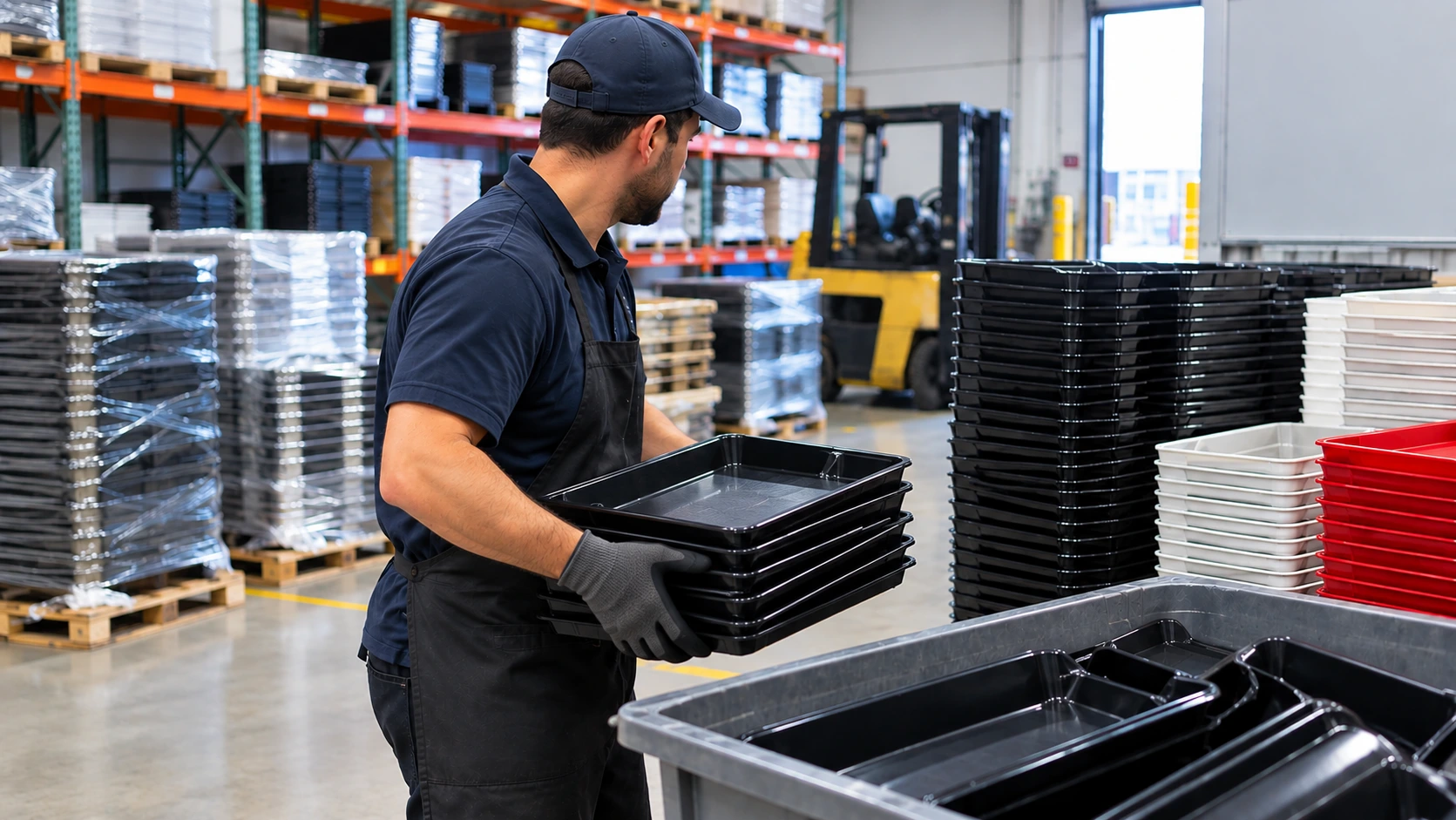
Plastic trays carry real scrap value that depends on resin type, cleanliness, and market demand, and it’s often higher than businesses expect.
In this article, we’ll cover the materials used to make plastic trays, how to recycle plastic trays, whether they’re food safe, how businesses can sell them, and what factors drive the price a buyer will pay.
Let’s begin!
What Are the Most Common Materials Used to Make Plastic Trays?
The most common materials used to make plastic trays are:
- Polyethylene terephthalate (PET), valued for its clarity and use in cold retail displays
- Polypropylene (PP), chosen for its heat tolerance and microwave-safe performance
- Polystyrene (PS), used in rigid and foam trays for lightweight, low-cost packaging
- Acrylonitrile butadiene styrene (ABS), a durable, scratch-resistant option for reusable foodservice trays
- Polycarbonate, used where high breakage resistance and freezer-to-oven range are needed
What Are the Different Types of Plastic Trays?
The different types of plastic trays are:
- Divided serving trays: Used for delivery and takeaway meals that need separated compartments.
- Produce trays: Used for raw, unprocessed items like berries, mushrooms, and other fresh produce packaging.
- Sushi and grab-and-go trays: Rigid, clear trays designed for retail visibility.
- Vegetable and salad platters: Shallow, lidded trays used for ready-to-eat, pre-cut retail displays.
- Industrial plastic trays: Used in manufacturing to organize and transport small components.
PET is ideal for cold storage and food presentation due to its clarity, while Polypropylene (PP) withstands high temperatures.
– Reliance Packaging
Are Plastic Trays Recyclable?
Yes, plastic trays are recyclable when they are sorted by resin type and kept reasonably free of food residue and other contaminants. PET, PP, and PS trays each have established recycling markets.
How Are Plastic Trays Recycled?
Plastic trays are recycled through the following steps:
- Collection and sorting. Trays are separated by resin type and color at the point of generation.
- Baling or bulk staging. Sorted material is compacted or staged for pickup in bulk volumes.
- Transport to a processor. A recycling broker connects the material to a buyer or processing facility.
- Washing and shredding. Trays are cleaned, shredded into flakes, and any residual labels or residue are removed.
- Pelletizing. Clean flake is melted and formed into pellets for use in new products.
Should Plastic Trays Be Prepared Before Recycling?
Yes, plastic trays should be prepared before recycling. Rinsing off major food residue, separating trays by resin type, and removing film lids or non-plastic components all help protect the scrap value of the load and reduce processing costs for the buyer.

How Can Businesses Sell Their Plastic Tray Scrap?
Businesses can sell their plastic tray scrap by partnering with a recycling broker who connects the material to verified buyers on their behalf.
Companies that want to sell plastic trays in bulk benefit most: a single broker relationship simplifies pickup scheduling, documentation, and payment across every resin type.

What Is the Scrap Value of Plastic Trays?
The scrap value of plastic trays in the United States is between $0.10 and $0.60 per pound, according to Seraphim Plastics and the Bureau of International Recycling.
Recent findings suggest recyclable plastic, specifically trays made from recycled polyethylene terephthalate (rPET), represents a superior environmental option.
– Plastics Industry Association
What Factors Affect Plastic Tray Scrap Value?
The factors that affect plastic tray scrap value are:
- Resin type (PET, PP, and PS each have different base market values).
- Cleanliness and contamination level.
- Sorting quality and color consistency.
- Volume and consistency of supply.
- Regional market demand and transportation distance.

Have Scrap Plastic Trays? Explore Your Options With Carlin Waste Recycling
At Carlin Waste Recycling, we buy a minimum of 20,000 lbs of plastic tray scrap across PET, PP, and PS resins and connect it to some of the most competitive markets available.
Benefits of Choosing Carlin Waste Recycling as Your Recycling Broker
- Reliable pickups that keep warehouses and kitchens free of waste build-up
- Fair, market-based pricing with transparent, timely payments
- One-stop handling of PET, PP, PS, and other plastic scrap streams through a single trusted partner
- Reporting support that helps businesses track material diversion for sustainability goals
Industries We Support with Recycling Solutions
Our team works with businesses across several industries that regularly generate plastic tray and packaging scrap:
- Manufacturing. We help production plants reduce downtime and waste-related costs with coordinated pickups and detailed material reporting that supports ESG goals.
- Third-Party Logistics (3PL) & Distribution:. We clear packaging scrap and rejected loads quickly, keeping docks open and freight moving without delays.
- Foodservice Distributors. We provide clean, scheduled removal of trays, containers, and film with full chain-of-custody documentation for food-grade handling standards.
- Small Commercial Recyclers. We help independent recyclers reach bigger markets and better pricing by consolidating loads and offering dedicated broker support.
Ready to turn your plastic tray waste into consistent revenue? Request a quote today and talk to a broker.

Plastic Trays FAQs
What Is the Minimum Quantity to Sell Plastic Trays Scrap for Recycling?
The minimum quantity to sell plastic trays scrap for recycling to Carlin Waste Recycling is 20,000 lbs.
Are Plastic Trays Food Safe?
Yes, plastic trays are food safe when they are made from FDA-approved, food-contact resins such as PET, PP, and certain grades of polycarbonate designed for direct food contact.
Are Colored Plastic Trays Recyclable?
Yes, colored plastic trays are recyclable, though clear and natural-colored trays typically hold a higher scrap value than dyed or opaque material because they support a wider range of end uses.
Leave a Reply