

Key Takeaways
- A well planned sustainable waste management program can cut disposal bills by reducing landfill volume and turning scrap into revenue.
- The average market price for managing your sustainable waste is around $64.
- Carlin Waste Recycling’s 4-step process will guarantee your business a successful sustainable waste management. Get a quote now!
Every ton your facility sends to a landfill carries a fee, and those fees keep climbing. Sustainable waste management gives you a way to shrink that bill while still meeting environmental goals.
In this guide, you’ll learn what the approach involves, what it costs, and how it saves money. You will also find five tips you can put to work this quarter.
Let ‘s get into it!
What Is Sustainable Waste Management?
Sustainable waste management is a system for handling materials so they create the least possible harm and the most possible value. It covers everything from how a facility generates scrap to where each load finally ends up.
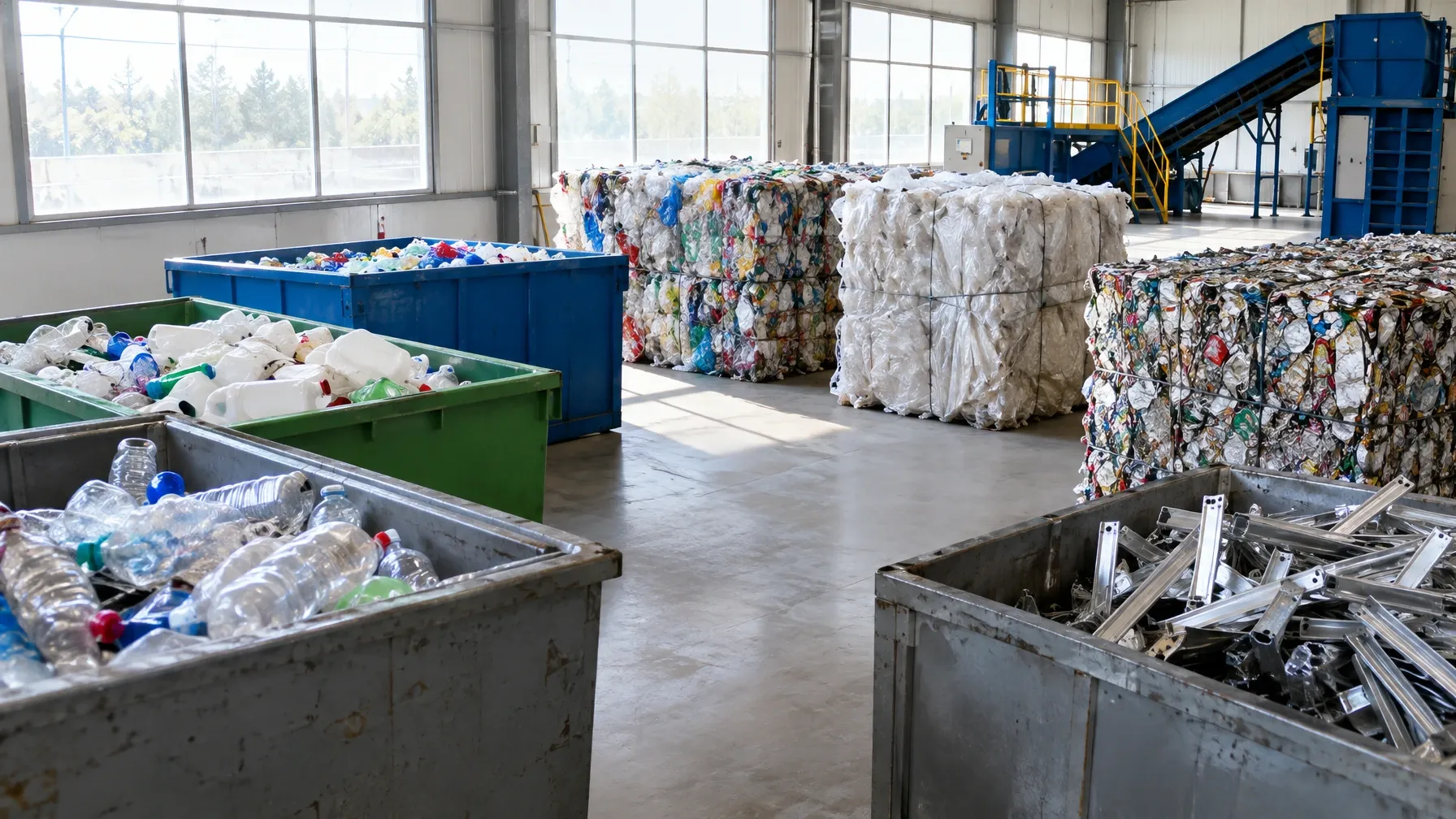
This is especially relevant for industrial operations, where plastic, metal, and packaging scrap may still have market value. A well-managed waste program helps identify suitable buyers and find a productive use for materials that would otherwise be discarded.
The approach also supports your customers. Many buyers expect suppliers to demonstrate responsible waste practices as part of their sustainability commitments.
What Are the Goals of Sustainable Waste Management?
The goals of sustainable waste management are to protect the environment, conserve resources, and keep operating costs under control. A well-designed program focuses on the following priorities:
- Reduce the amount of waste created at the source.
- Keep recoverable materials out of landfills.
- Lower disposal and hauling expenses over time.
- Meet regulatory and customer expectations with clear records.
- Create new revenue from clean, sellable scrap.
What’s the Difference Between Traditional and Sustainable Waste Management?
The difference between traditional and sustainable waste management is the end goal. Traditional systems focus on getting rid of waste, while sustainable systems focus on getting value out of it.
The table below shows how that plays out day to day:
| Area | Traditional Waste Management | Sustainable Waste Management |
| Main goal | Remove waste quickly | Recover value and reduce harm |
| Typical outcome | Landfill or incineration | Reuse, recycling, resale |
| Cost pattern | Fees rise with every ton | Fees drop as volume falls |
| Revenue | None | Possible from clean scrap |
| Tracking | Basic hauling receipts | Detailed data and reporting |
| Long term value | Low | High |
Notice how the cost pattern changes. In a traditional setup, you pay more as production grows. In a sustainable setup, growth can bring more scrap to sell. You also gain better data, which can help you spot problems early, such as a machine that produces too many rejects.
Pollution is nothing but the resources we are not harvesting. We allow them to disperse because we’ve been ignorant of their value.
– R. Buckminster Fuller, Architect
Which Types of Waste Require Sustainable Management?
The types of waste that require sustainable management are those that are produced in large volumes or hold resale value. Most industrial sites generate several of these at once:
- Plastic scrap such as regrind, film, and off spec parts.
- Metals including aluminum, steel, and copper.
- Paper and cardboard from packaging and shipping.
- Wood pallets and crating material.
- Hazardous and electronic waste, which needs certified handling.

How Is Sustainable Waste Management Implemented?
Sustainable waste management is implemented by following a clear sequence that starts with data and ends with ongoing review. Most facilities follow these steps:
- Audit your waste streams to identify the types of materials you generate, their volumes, current disposal methods, and potential recovery value.
- Set measurable targets for waste diversion, material recovery, and cost reduction so you can track progress and evaluate results.
- Separate materials at the source to prevent contamination and keep recyclable materials in good condition for resale or recovery.
- Find buyers and recyclers that accept your specific material grades, quantities, and quality levels.
- Train your team on sorting procedures, material handling, and storage requirements to ensure everyone follows the same process.
- Track results and review performance quarterly to identify areas for improvement, adjust collection schedules, and measure progress toward your goals.
Recycling is not just an option; it’s a necessity.
– Ban Ki-moon, United Nations
5 Tips for Implementing Sustainable Waste Management in Industrial Facilities
Industrial facilities can implement sustainable waste management without overhauling their entire operation at once.
These five tips are a good place to start:
- Tip 1: Run a waste audit. Measure each stream before you change anything, so you know where the money goes.
- Tip 2: Sort materials at the source. Clean, separated scrap sells for more than mixed loads.
- Tip 3: Cut waste at the process level. Adjust settings, tooling, and schedules to produce fewer rejects.
- Tip 4: Sell recoverable scrap. Materials like plastic regrind and trim have real market value.
- Tip 5: Work with a specialist. A recycling broker can connect your materials with suitable buyers and help coordinate pricing, transportation, and documentation.
How Much Does Sustainable Waste Management Cost?
Sustainable waste management costs $63.48 per ton in the United States, according to the Environmental Research and Education Foundation.

How Does Sustainable Waste Management Lower Industrial Disposal Costs?
Sustainable waste management lowers industrial disposal costs by cutting the tons you pay to dump and adding income from what you recover. The main savings sources are:
- Lower tipping fees because less material reaches the landfill.
- Fewer hauls, since baled or consolidated loads fill trucks better.
- Scrap sales that turn a cost into a credit.
- Reduced material purchases when scrap goes back into production.
- Avoided penalties through proper tracking and documentation.
How to Choose the Right Sustainable Waste Management Disposal Partner
To choose the right sustainable waste management partner, look for proven experience with your specific materials and industry. A partner who understands plastic scrap will treat it differently than one who only hauls mixed trash.
Ask how pricing is determined and what documentation they provide, including certificates of destruction when applicable. Transparent pricing and clear records make it easier to track material recovery and understand the value you receive.
Check their reach too. A partner with strong buyer networks can find the best market for each grade you produce.
Finally, make sure their services fit your operation. Look for flexible pickup schedules, one-time cleanouts, and freight coordination. Ask for references from businesses in your industry to get a better sense of their reliability and service quality.

Partner With Carlin Waste Recycling, Your Reliable Scrap Material Broker
At Carlin Waste Recycling, we help industrial, logistics, and foodservice businesses turn scrap into value. With more than 10 years of experience in the recycling industry, we connect businesses with buyers for their recoverable materials.
We serve businesses across the United States and accept qualifying loads starting at 20,000 lbs.
Our company is built on reliable service, fair pricing, and straightforward communication. We work to provide the same level of attention and support to every client, regardless of account size.
Explore the materials we handle and the industries we serve to see if your operation is a good fit!
How Our Scrap Recycling Process Works
- Facility audit. We visit your site or review it remotely to learn your operations, waste streams, and shipping needs.
- Material testing and market review. We check the quality and grade of each material, then match it with the strongest recycling channel.
- Financial and savings assessment. We calculate expected returns, cost savings, and payment terms so you see the exact impact.
- Custom proposal. You receive a clear plan with pickup schedules, pricing, documentation, and a timeline.
Have scrap ready to sell? Request a quote today.

Sustainable Waste Management FAQs
Is Sustainable Waste Management the Same as Recycling?
No, sustainable waste management is not the same as recycling. Recycling is one tool inside a larger strategy that also includes reduction, reuse, and responsible disposal.
What Are the 3 Rs of Sustainable Waste Management?
The 3 Rs of sustainable waste management are reduce, reuse, and recycle. Reduce what you create, reuse what you can, and recycle the rest.
Does Sustainable Waste Management Require New Equipment?
Yes, sustainable waste management may require a few basics such as sorting bins or a baler. Many facilities start with the equipment they already own and add pieces as volume grows.
Leave a Reply