

Key Takeaways
- Plastic barrels are made from HDPE, one of the most recyclable and commercially valued plastics in industrial settings.
- Clean and sorted plastic barrel scrap can sell for $0.20 to $0.56 per pound in the United States.
- Carlin Waste Recycling buys plastic barrel scrap from businesses across the U.S. Get a quote today!
Plastic barrels are one of the most widely used industrial containers in the U.S., and by the time they reach end of life, most businesses aren’t sure what to do with them.
This guide walks you through everything you need to know about plastic barrel scrap: what they’re made of, how they’re recycled, what they’re worth, and how to connect with buyers who pay competitively.
Let ‘s dive in!
What Are Plastic Barrels?
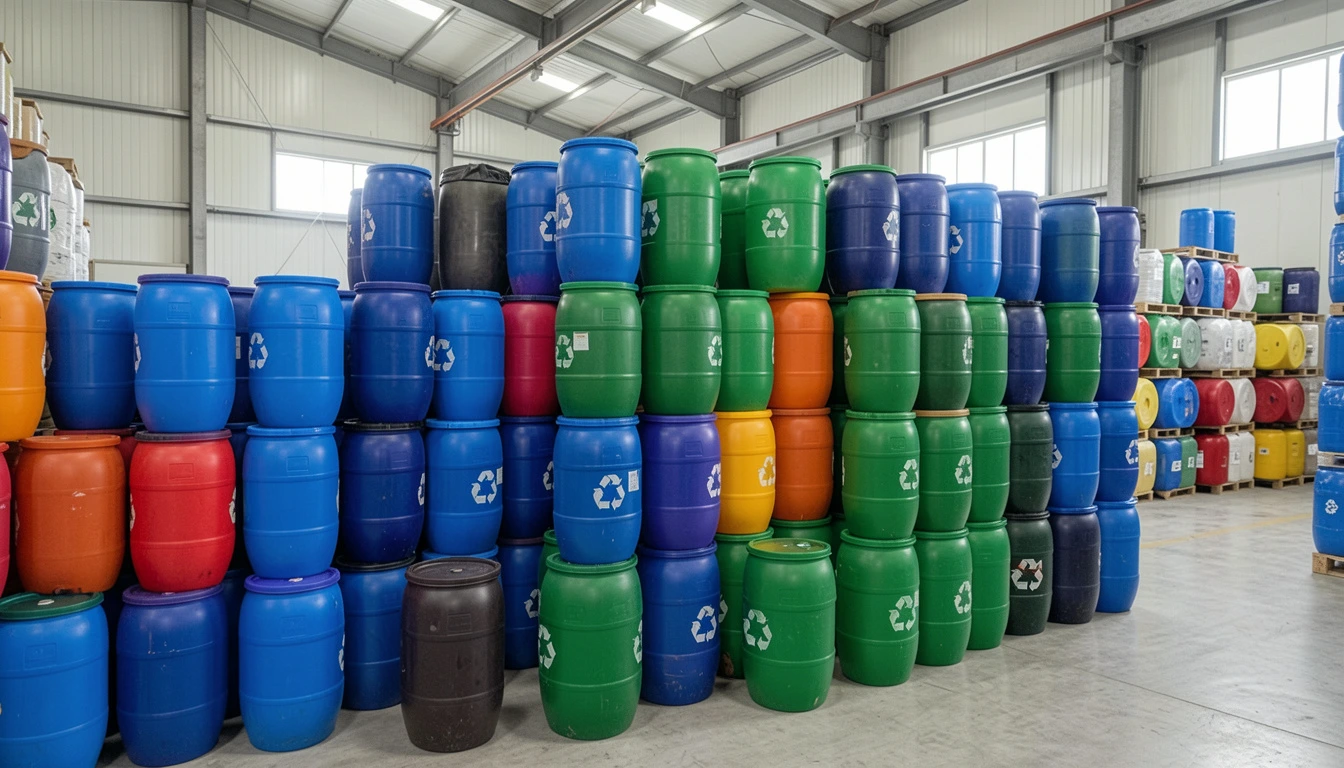
Plastic barrels are cylindrical industrial containers designed to store, transport and protect bulk quantities of liquid and solid materials across commercial and industrial supply chains.
They are widely used because of their chemical resistance and light weight compared to steel alternatives. Another relevant fact is their compliance with FDA and UN regulations for food-grade and hazardous material storage.
The terms “barrel,” “drum,” and “poly drum” are often used interchangeably in industrial settings, though technically a barrel originally referred to a 42-gallon oil container and a drum to a 55-gallon container. Today both refer broadly to large cylindrical plastic storage units.
What Are Plastic Barrels Made Of?
Plastic barrels are made of high-density polyethylene (HDPE), a Type 2 thermoplastic resin known for its high molecular weight and resistance to a wide range of chemicals and pH levels.
HDPE possesses excellent impact resistance, leakage prevention, and UV stabilization for longer periods, which makes it the dominant material for barrel manufacturing across industries. Some specialty barrels are made from polypropylene (PP) or polyvinyl chloride (PVC), depending on the chemical compatibility requirements of the contents.
What Are the Different Types of Plastic Barrels?
The different types of plastic barrels are:
1. Closed-head (tight-head) Barrels
Fully sealed containers with two access plugs at the top. Best suited for low-viscosity liquids such as water, oils, fuels, and industrial chemicals. Common in chemical distribution, petroleum, and pharmaceutical logistics.

2. Open-head (open-top) Barrels
Feature a fully removable lid secured by a clamp or ring. Preferred for semi-solids, powders, adhesives, and viscous materials that need direct access during filling or emptying. Common in food processing, agriculture, and chemical blending.

3. Taper-sided Barrels
Lighter than standard drums with angled sides that allow nesting for compact storage. Often used in operations where space efficiency matters.

4. FIBC-compatible Drums
Rigid outer barrels designed to contain flexible inner liners, used in food ingredients, resins, and pharmaceutical applications where contamination prevention is critical.

Can Plastic Barrels Be Recycled?
Yes, plastic barrels can be recycled. HDPE, the primary resin used in barrel manufacturing, is one of the most recyclable and commercially traded plastics in the industrial sector.

How Are Plastic Barrels Recycled?
Plastic barrels are recycled through the following steps:
- Collection and sorting: Barrels are gathered by resin type (HDPE, PP, PVC) and head type (open vs. closed). Mixed loads are harder to evaluate and typically command lower rates.
- Cleaning and decontamination: Residual chemicals, food waste, labels, and stickers are removed. After high-pressure cleaning, remaining residues including chemical solution, mud, sand, and sewage are eliminated before the material proceeds to shredding.
- Shredding: Cleaned barrels are fed into industrial shredders that break them into strips and fragments, reducing volume for transport and processing.
- Secondary crushing: A crusher reduces shredded material into smaller granules suitable for washing and separation.
- Washing and float-sink separation: Material is cleaned again and passed through a water-based separation system that removes non-HDPE contaminants based on density differences.
- Dewatering: Moisture is removed, bringing the material to less than 1% moisture content.
- Pelletizing or regrind output: The processed HDPE is extruded into pellets or collected as regrind, ready for sale to compounders and manufacturers producing new plastic products.
What Is the Scrap Value of Plastic Barrels?
The scrap value of plastic barrels in the United States is around $0.20 to $0.56 per pound according to ScrapMonster.

We Buy Plastic Barrels: Carlin Waste Recycling
At Carlin Waste Recycling, we buy plastic barrel scrap, including HDPE closed-head and open-head drums, from industrial businesses across the United States.
Whether your barrels come from manufacturing cleanouts, end-of-use food service containers, or logistics operations, we connect you to verified buyers, and coordinate pickup from your facility.
How Our Plastic Barrel Scrap Recycling Process Works
Working with Carlin Waste Recycling follows four clear steps designed to get your barrel scrap evaluated, priced, and collected without guesswork.
- Step 1: Facility Audit. We start by reviewing your operation, in person or virtually, to understand your barrel volumes and logistics setup. This gives us everything we need to assess your material accurately.
- Step 2: Material Testing and Market Evaluation. We evaluate your barrel scrap for resin grade, cleanliness, and current market value, to then identify which buyers are actively paying the best rates for your specific material.
- Step 3: Transparent Financial Assessment. Before anything moves, you receive a clear breakdown: projected returns, any applicable logistics costs, and payment terms.
- Step 4: Customized Proposal and Pickup. Once you approve the terms, we handle coordination, pricing, and documentation from start to finish. Your barrel scrap ships to the right buyer, and payment follows on the agreed timeline.
For more on materials we handle, visit our materials page.

Plastic Barrels FAQs
What Is the Minimum Quantity to Sell Scrap Plastic Barrels?
The minimum quantity to sell scrap plastic barrels to Carlin Waste Recycling is 20,000 lbs. This threshold allows us to accurately evaluate your material, arrange freight efficiently, and connect your load to a buyer at a competitive rate.
How Long Does It Take to Get Paid for Plastic Barrel Scrap?
Carlin Waste Recycling takes 30 days to pay for your plastic barrel scrap after the load is received and verified by the buyer. Payment terms are confirmed before pickup so there are no surprises on either side.
How Long Do Plastic Barrels Last?
Plastic barrels last between 10 and 20 years under normal use conditions, depending on the resin type, the contents stored, UV exposure, and how frequently they are cleaned and handled. HDPE barrels used for non-corrosive or food-grade applications tend to last longer than those exposed to aggressive chemicals or extreme temperatures. Once a barrel is no longer safe for reuse, it qualifies as recyclable scrap if it is clean and free of hazardous residue.
Leave a Reply