

Key Takeaways
- PVC and CPVC are thermoplastic materials commonly used in piping, plumbing, construction, and industrial applications.
- PVC and CPVC scrap prices in the United States range from approximately $0.01 to $0.65 per pound.
- Carlin Waste Recycling buys qualifying bulk plastic scrap across the United States, with a minimum purchase quantity of 20,000 lbs. Contact us to get a quote!
PVC and CPVC are two widely used plastics in residential, commercial, and industrial applications. While they share several properties, differences in chemical composition, heat resistance, and performance make them suitable for different uses.
In this guide, we’ll compare their properties and applications, explain how each material is recycled, and explore their scrap value and recycling opportunities for businesses.
Let´s get started!
What Is PVC?
PVC (polyvinyl chloride) is a synthetic thermoplastic polymer made from vinyl chloride monomers. It is one of the most widely used plastics in the world because it combines durability, chemical resistance, low weight, and relatively low production costs.
PVC is available in two main forms:
- Rigid PVC (uPVC): A hard, durable material commonly used in water pipes, drainage systems, window frames, doors, electrical conduits, PVC sheets, and other construction products.
- Flexible PVC: Contains plasticizers that make it softer and more flexible. It is commonly found in electrical cable insulation, hoses, flooring, and other flexible products.
What Is CPVC?
CPVC (chlorinated polyvinyl chloride) is a thermoplastic material produced by adding chlorine to PVC through a chemical process called chlorination. This additional chlorine changes the polymer’s structure, improving its resistance to higher temperatures and certain chemicals.
What Are the Key Differences Between CPVC and PVC?
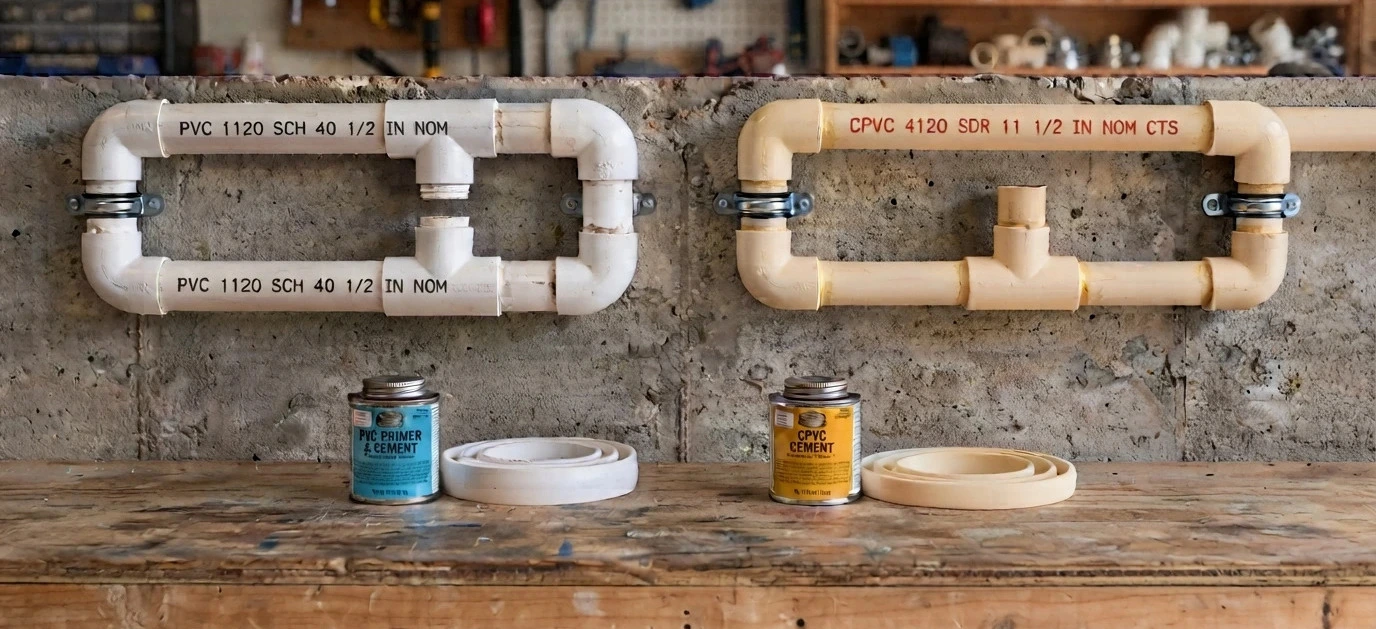
The key differences between CPVC and PVC are:
| Differences | PVC | CPVC |
| Benefits | Affordable, durable, lightweight, corrosion-resistant, and easy to install. | Higher temperature resistance, good chemical resistance, durable, and suitable for hot-water applications. |
| Common use | Cold-water plumbing, drainage, irrigation, electrical conduits, and construction. | Hot and cold-water plumbing, industrial piping, chemical processing, and approved fire sprinkler systems. |
| Temperature rating | Up to 140°F (60°C). | Up to 200°F (93°C). |
| Pressure rating | Varies by pipe size, schedule, and temperature. | Varies by pipe size, schedule, and temperature. |
| Chemical resistance | Resistant to many acids, bases, salts, and other chemicals. | Broader chemical resistance in certain high-temperature applications. |
| Flexibility | Rigid in standard pipe applications. | More brittle than PVC in some conditions. |
| Cost | Less expensive. | More expensive due to additional processing and higher material costs. |
| Joining method | PVC-specific solvent cement and primer. | CPVC-specific solvent cement and compatible fittings. |
PVC is one of the most versatile and widely used polymers in the world.
– VinylPlus, VinylPlus 2030 Commitment.
Can CPVC and PVC Be Recycled?
Yes, CPVC and PVC can both be recycled. Because they are thermoplastics, they can be processed and reshaped through mechanical recycling methods.
However, they should not be treated as interchangeable materials during recycling. Their different chemical compositions mean they require separate identification and sorting before processing.

How Are CPVC and PVC Recycled?
CPVC and PVC are recycled through mechanical recycling, a process that involves identifying, sorting, cleaning, and processing the plastic into reusable material.
Although the exact procedure varies between facilities, the general process involves the following steps:
- Collection and identification: Scrap materials, including fabrication scrap, are collected from manufacturing operations, construction projects, demolition sites, and other sources. Recyclers identify the type of plastic to determine whether it is PVC or CPVC.
- Sorting and separation: PVC and CPVC are separated into different material streams. Other contaminants, including metals, rubber, and incompatible plastics, are also removed. This step is particularly important because CPVC should not be mixed into standard rigid PVC recycling grades.
- Cleaning: The sorted materials are washed to remove dirt, adhesives, labels, and other surface contaminants. The amount of cleaning required depends on the condition and source of the scrap.
- Size reduction: The materials are shredded or ground into smaller pieces, producing plastic regrind that is easier to handle and process.
- Processing: The clean, sorted material is processed through specialized recycling equipment. It is typically melted and reformed into pellets or another usable form, depending on the material and recycling facility.
- Manufacturing new products: The recovered plastic is used as feedstock for new products, depending on its quality, composition, and the specifications of the manufacturer.
What Is the Scrap Value of CPVC and PVC?
The scrap value of CPVC and PVC is $0.18 per pound for PVC scrap in the United States, according to the Scrapo Price Index reports.

What Factors Affect CPVC and PVC Scrap Value?
The factors that affect CPVC and PVC scrap value are:
- Material type: PVC and CPVC have different chemical compositions and recycling requirements. Their marketability depends on the availability of plastic recycling companies that accept each material.
- Material condition: Clean, dry scrap with minimal contamination is generally more desirable than material containing dirt, adhesives, metal, or other plastics.
- Sorting and separation: Properly identified and separated materials are easier to process. Mixing PVC with CPVC or incompatible plastics can reduce the value of a load or result in rejection.
- Material form: Scrap can be sold as loose pieces, pipe offcuts, shredded material, regrind, or pellets. Pipe offcuts from manufacturing are one example of pipe extrusion scrap. More processed material may command higher asking prices because it requires less preparation from the buyer.
- Quantity: Larger, consistent loads can be more attractive to industrial recycling facilities because they help reduce transportation and handling costs per pound.
- Color and composition: Color consistency and the presence of additives or stabilizers can influence whether a material meets a buyer’s specifications. This is particularly relevant for plastic compounding scrap, where material composition affects its potential for reuse.
- Market demand: The price of virgin plastic resin, manufacturing activity, transportation costs, and demand for recycled materials can all influence scrap prices.

Turn Your PVC Scrap into Value With Carlin Waste Recycling
At Carlin Waste Recycling, we help businesses across the United States find recycling opportunities for bulk plastic scrap. We buy plastic scrap nationwide with a minimum purchase quantity of 20,000 lbs.
Whether your business generates PVC pipe offcuts, manufacturing rejects, or other industrial plastic materials, we can help you explore potential recycling opportunities.
If you have a bulk quantity of PVC or other qualifying plastic scrap, contact our team to discuss your material and get a quote today!

CPVC vs. PVC FAQs
What Is the Maximum Temperature That CPVC and PVC Can Withstand?
The maximum temperature CPVC can withstand is typically 200°F (93°C), while standard PVC pressure piping can withstand temperatures up to 140°F (60°C). Actual ratings depend on the specific product and manufacturer. Pressure capacity also decreases as operating temperature increases.
Can CPVC and PVC Be Recycled Together?
No, CPVC and PVC should not be recycled together in standard rigid PVC recycling streams. Their different chemical compositions require separate sorting and processing to maintain material quality and prevent contamination.
What Happens If You Use PVC Glue on CPVC?
If you use PVC glue on CPVC, the connection may not form a reliable, properly fused joint. PVC and CPVC require compatible solvent cements formulated for their respective materials. Always follow the pipe and fitting manufacturer’s installation recommendations.
Leave a Reply