

Key Takeaways
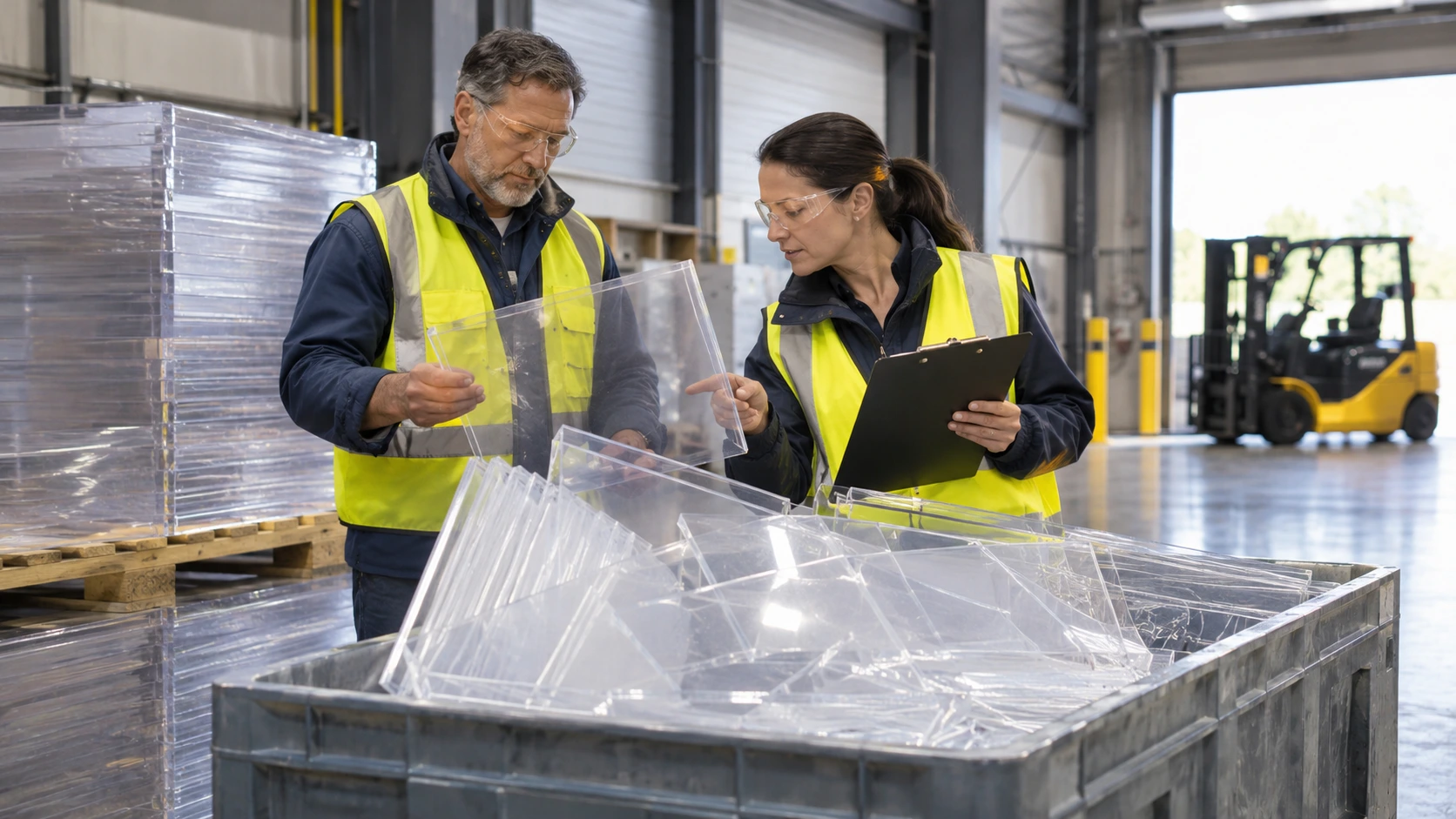
- Clean, properly identified industrial Lexan scrap can retain value when separated from other plastics.
- Lexan can sell for $0.36 to $0.49 per pound, although actual scrap purchase prices may differ.
- Businesses can sell qualifying Lexan scrap through Carlin Waste Recycling in loads of at least 20,000 lbs, provided the material is clean and properly separated.
If your business generates Lexan scrap from manufacturing, fabrication, or retired industrial components, that material could be worth more than you think.
In this guide, we’ll explain what determines Lexan scrap value, explain how the recycling process works, and cover what you need to know before selling your material.
Let ‘s get started!
What Is Lexan?
Lexan is a brand of polycarbonate (PC), a durable thermoplastic. Originally developed by General Electric and now part of SABIC’s portfolio, it’s commonly used as a lightweight alternative to glass in demanding applications.
You’ll commonly find Lexan in:
- Industrial machine guards and protective barriers.
- Automotive lighting and interior components.
- Electrical and electronic housings.
- Construction glazing and roofing panels.
- Safety shields and specialized equipment.
- Transparent sheets, films, and fabricated parts.
What Is Lexan Made Of? – Main Properties
Lexan is made of polycarbonate, an engineering thermoplastic whose polymer chains contain carbonate linkages. Conventional polycarbonate is commonly manufactured using bisphenol A (BPA) as a building block.
Different grades may also contain additives that improve UV resistance, flame performance, color stability, or other characteristics required for specific applications.
According to SABIC’s Lexan product information, the material combines several useful properties:
- High impact resistance: It withstands significant physical stress without shattering like conventional glass.
- Optical clarity: Transparent grades allow high light transmission, making them suitable for glazing and protective panels.
- Heat resistance: Polycarbonate generally tolerates higher service temperatures than many other clear plastics, although limits vary by grade.
- Dimensional stability: Its rigidity helps manufactured components retain their intended shape.
- Processing versatility: The material can be molded, extruded, thermoformed, and fabricated into different products, generating materials such as injection molding scrap and fabrication scrap that can be collected for recycling.

How Does Lexan Compare to Other Clear Plastics?
Lexan compares to other clear plastics by offering particularly strong impact resistance and good thermal performance, while materials such as acrylic, PVC and PETG have advantages in optical appearance, fabrication, or cost.
| Material | Impact Resistance | Clarity | Heat Resistance | Common Uses |
| Lexan (PC) | Very high | High | High | Machine guards, protective glazing, automotive parts |
| Acrylic (PMMA) | Moderate | Excellent | Moderate | Displays, signs, windows, decorative panels |
| PETG | High | Excellent | Moderate to low | Packaging, displays, formed components |
| Clear PVC | Moderate | Good | Low to moderate | Industrial partitions, protective covers, fabricated panels |
Properties are general comparisons. Actual performance depends on material grade, thickness, additives, and operating conditions.
Can Lexan Be Recycled?
Yes, Lexan can be recycled because polycarbonate is a thermoplastic that can be reheated and reprocessed into usable material.
Specialized recycling facilities, drop-off programs, and scrap brokers can help businesses find recovery options for this material when it is clean and properly sorted.
In principle, all types of thermoplastics can be mechanically recycled with little or no impact on quality.
– PlasticsEurope
How Is Lexan Recycled?
Lexan is recycled through a series of steps that prepare the material for recovery and transformation into new products. The exact Lexan recycling process depends on the grade and condition of the material. A typical mechanical recycling operation follows these steps:
- Collection and identification: Polycarbonate scrap is collected and its resin type, grade, production source, and composition are checked.
- Sorting: The material is separated from incompatible plastics and grouped according to relevant specifications, including color and additives.
- Contaminant removal: Foreign materials such as metal inserts, labels, dirt, and removable coatings are addressed according to the recycler’s requirements.
- Shredding or grinding: Sheets, parts, and other pieces are reduced into smaller, more uniform particles for easier handling.
- Washing and drying: When necessary, the material is washed and thoroughly dried. Moisture control is particularly important when polycarbonate is melted again.
- Reprocessing: Suitable material is melted, filtered, and extruded into pellets or prepared as regrind for compatible manufacturing applications.
- Quality verification: The recovered material may be tested for melt flow, contamination, and other properties before being supplied for reuse.

What Is the Scrap Value of Lexan?
The scrap value of Lexan is between $0.36 to $0.49 per pound in the United States, according to Scrapo.
Successful recycling tends to happen when it is financially viable, technically feasible, and environmentally beneficial.
– National Institute of Standards and Technology (NIST)
What Factors Affect Lexan Scrap Value?
The factors that affect Lexan scrap value are:
- Polycarbonate grade: Standard PC, specialty copolymers, filled grades, and flame-retardant formulations may have different recovery options and market values.
- Material cleanliness: Dirt, oils, adhesives, mixed plastics, and other contaminants can increase processing costs or restrict acceptance.
- Color and transparency: Clear and consistently colored loads may offer greater flexibility for reuse than mixed-color material.
- Scrap form: Sheets, offcuts, purges, molded parts, flakes, regrind, and pellets require different levels of preparation.
- Quantity and consistency: Large, uniform shipments and recurring material streams can make transportation and buyer planning more practical.
- Documentation: Resin specifications, supplier labels, production records, and sample availability help buyers verify the material.
- Pickup location: Transportation distance, loading requirements, and access to suitable processors affect the economics of a transaction.
- Market demand: Offers fluctuate according to the availability of recovered PC and the needs of manufacturers and compounders.

Have Plastic Scrap to Sell? Carlin Waste Recycling Is Your Trusted Broker
At Carlin Waste Recycling, we help businesses across the United States sell qualifying industrial plastic scrap through reliable recycling brokerage.
With more than 10 years of experience, we work with manufacturers, logistics providers, and commercial recyclers to simplify plastic scrap sales and maximize material recovery value. Our minimum purchase quantity is 20,000 lbs of clean, properly separated plastic scrap.
Whether you generate Lexan offcuts, surplus resin, plastic regrind, or injection molding scrap, we can evaluate your material and identify available recycling markets.
How Our Plastic Recycling Process Works: From Pickup to Payment
- Review Your Facility and Material
We begin with an on-site or virtual assessment of your operation. This includes the type of plastic you generate, estimated volume, storage conditions, and pickup requirements. - Evaluate Quality and Buyer Requirements
We assess the available material information, including resin grade, condition, consistency, and potential contamination. We then evaluate suitable recycling markets for your load. - Determine Pricing and Logistics Costs
Once the material has been reviewed, we assess potential returns alongside transportation, handling, and other relevant costs. We also discuss the proposed payment terms. - Prepare Your Recycling Proposal
We present a plan outlining pricing, documentation requirements, and the anticipated pickup schedule. Once the terms are approved, we coordinate transportation and delivery to the selected buyer.
Payment follows the agreed terms after the shipment has been received and verified.
Before pickup, your Lexan scrap must already be clean and separated from incompatible materials. If sorting or contamination removal is required, your facility should complete those preparations before arranging the sale.
Ready to find out what your material could be worth? Request a quote and share your available quantity, material specifications, photographs, and pickup location. We’ll help you evaluate your recycling options.

Lexan FAQs
Is Lexan the Same as Polycarbonate?
Yes, Lexan is a brand of polycarbonate (PC), but not all polycarbonate is Lexan. The name refers to a specific branded family of materials, while polycarbonate is the broader polymer category.
Is Lexan Stronger Than Plexiglass?
Yes, Lexan is generally stronger than Plexiglass in terms of impact resistance. Plexiglass is acrylic (PMMA), which typically offers better scratch resistance and optical clarity, while polycarbonate is tougher under impact.
Does Lexan Crack Easily?
No, Lexan does not crack easily under ordinary impact because it is a highly impact-resistant plastic. However, severe stress, certain chemicals, environmental exposure, or improper fabrication can cause cracking or other damage.
What Is the Minimum Quantity to Sell Plastic Scrap to Carlin Waste Recycling?
The minimum quantity to sell Lexan scrap to Carlin Waste Recycling is 20,000 lbs. The material must be clean, properly separated, and approved for purchase based on its specifications and market availability.
Leave a Reply